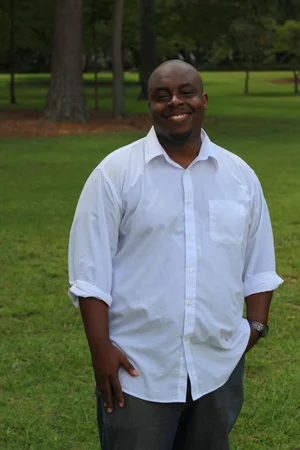
Jacque Aye: “Tending to Her Tiny World”
For some children, imagination is more than play. It is shelter.
When the world feels too loud, too lonely, or governed by rules they never agreed to, they retreat into places where they can control the cast, rewrite the dialogue, and decide how the story ends. Books become companions. Cartoons become windows. A blank page becomes a world that asks nothing of them except that they imagine something worth placing inside it.
Some children eventually outgrow those worlds.
Others begin building their own.
Most children spend recess trying to escape the classroom. Jacque Aye spent hers trying to finish a book.
It began with an elementary-school assignment. Her teacher asked the class to write stories, transformed their work into hardcover books, and hosted what Jacque remembers as a “fancy author signing.” While her classmates ran outside to play, Jacque stayed behind to write. The book, she says, “was everything to me.”
Not much has changed.
Jacque still prefers books and cartoons to the unpredictable calculations of conversation. Reading, she explains, is “fun and enlightening,” while talking to people feels like playing chess—one slight complication being that she does not know how to play chess.
It is a funny answer, delivered with the lightness that often accompanies Jacque’s sharpest observations. But it also offers an early glimpse of the woman behind multiple works: a wonderfully unconventional creator who communicates most freely through strange stories, tiny worlds, and characters who are permitted to exist without translating themselves for everyone watching.
One might be tempted to describe her life as a transformation—the lonely Kansas reader eventually emerging as an author, entrepreneur, and community-builder. Jacque would likely object to that framing. In fact, she already has.
“I wouldn’t say that’s a different ‘version’ of me.”
There was no cocoon. No dramatic emergence. Jacque Aye has been Jacque Aye all along.
Worlds, Communities, and Lamentations
On her website, Jacque introduces herself as an “Igbo gyal, ND writer, and incessant oversharer.” It is an appropriately unconventional introduction for someone whose work resists easy categorization. She writes about flawed Black women navigating anxiety, depression, identity, and the general absurdity of adulthood—sometimes through magical girls, sometimes through monsters, and sometimes through worlds that feel only slightly stranger than our own.
She describes what she does in three parts: “I create worlds, build communities, and lament for a living.”
The worlds include Adorned by Chi, her Nigerian-inspired interpretation of the magical-girl genre; Tuesday’s Blues, a monster-filled Battle of the Bands featuring a pink-clad witch and a shadow creature wearing Jordans; and How to Be a Better Adult, an absurdist novella about an autistic Black woman navigating adulthood by “any magical means necessary.”
The community can be found in the Black Girl Book Fair, the virtual event Jacque created to help Black women authors reach readers—and to ensure that people who are neurodivergent or require accommodations can participate from the comfort of home.
The lamenting is more difficult to separate from everything else. It lives in her anxious protagonists, her interest in mental health, and even her ambition to become a licensed therapist. Jacque’s stories may be strange, whimsical, and frequently funny, but the women inside them are confronting recognizable questions: How do you survive a world whose expectations were written before you arrived? How do you care for your own life without turning it into a performance for everyone else?
The Play She Didn’t Write
Or, as Jacque once put it: “I’m tired of acting in a play I didn’t write.”
The statement sounds like a declaration of independence—the kind of line traditionally followed by a triumphant account of seizing control, rewriting the script, and finally living on one’s own terms.
That is not Jacque’s answer.
“I think every human can relate to being born into a world where expectations are set for you by the world at large, rather than you exploring the world for yourself,” she explains.
When asked which parts of her present life finally feel as though she wrote them, Jacque does not manufacture an empowering conclusion.
“No parts feel like I wrote them,” she says. “If I wrote any of this, this would not be the plot.”
The answer is funny, but it refuses the familiar narrative that adulthood eventually rewards us with complete authorship over our lives. Jacque writes fictional worlds for a living, yet she makes no such claim over the one she inhabits. The plot remains unpredictable. The expectations remain present. What has changed is her understanding of the person expected to perform inside them.
In previous corporate roles, Jacque often felt weird, isolated, and conspicuous. She has spoken about being the only Black woman in the office, having harmless behaviors scrutinized, and discovering that one reason she had been selected for a position was her willingness to accept less than $30,000 a year.
Experiences like those can make a person turn every uncomfortable interaction inward. When a workplace repeatedly treats you as though you are the disruption, it becomes easy to wonder whether you are the problem.
Jacque now possesses a piece of context that corporate Jacque did not.
“I know I’m autistic now.”
It is a short answer carrying years of retrospective weight. Behaviors once interpreted as personal deficiencies—or reasons she did not fit comfortably into certain rooms—can now be understood through a different lens. That understanding does not rewrite what happened, but it changes how the character at the center of those scenes can be read.
Jacque does not linger on the diagnosis or offer herself as a case study. Instead, she directs readers toward Hope, the autistic Black protagonist of How to Be a Better Adult. Hope attempts to navigate adulthood by “any magical means necessary,” moving through a surreal world shaped by the same expectations Jacque recognizes outside of fiction.
Perhaps that is what Jacque means by acting in a play she did not write. The script tells us what adulthood, professionalism, ambition, and success are supposed to look like. It assigns everyone a role and treats any deviation as a failure to perform.
Jacque may not believe she controls the plot. Her work, however, repeatedly questions whether that performance deserves so much of our energy.
Permission to Get Weird
If the world insists upon handing us roles, stories can provide a place to reject them.
Jacque describes How to Be a Better Adult as Sorry to Bother You meets the surrealism of Atlanta, with a little Awkward Black Girl added to the mixture. It is a combination that makes immediate sense once you enter Hope’s world—a place where the frustrations of adulthood are distorted just enough to reveal how absurd they already were.
Those works also belong to a growing tradition of Black storytelling that refuses to make Black characters perpetually composed, inspirational, respectable, or easily understood. They can be uncomfortable. Mundane. Depressed. Socially awkward. Completely ridiculous. Sometimes they can be all of those things before lunch.
For Jacque, seeing Black creators occupy those stranger corners of storytelling provides its own kind of permission.
“Seeing other Black people be themselves, even if that self is a little odd, a little awkward, or a little weird, is always inspiring,” she says.
That inspiration does not mean imitation. Jacque is careful about that distinction. Representation, for her, is not necessarily a blueprint to follow. Sometimes it is simply the pleasure of recognizing someone who looks like you creating within a genre you already love—and realizing you are allowed to enjoy that space a little more fully.
Which brings us to Tyler, the Creator.
Now, throughout this conversation, Jacque was measured. Reserved. Not especially interested in turning herself or her work into anything grander than she believes it to be.
Then I found the declaration on her website:
“Tyler, the Creator is the greatest creative to grace this planet.”
Not one of the greatest.
Not among the most influential.
The greatest creative to grace the entire planet.
Okay, Jacque. You have the floor. Defend your thesis.
To her credit, Jacque did not retreat.
“He’s unapologetically himself,” she explains. “He reflects on his growth, he’s open about his flaws, he can dress down, he’s strange and talented, and I love everything he does.”
Her admiration extends beyond Tyler’s music. She points to his creative partnership with Christian Clancy and the worlds they have built together—worlds shaped through sound, fashion, visual presentation, branding, humor, and reinvention.
Yet even here, Jacque resists turning another artist’s journey into instructions for her own.
“I allow myself to be a fan of him as a human, rather than seeing him as a map or blueprint to follow,” she says. “Or even an aspiration to reach.”
Then comes the sentence that brings the conversation firmly back to earth:
“I am simply an author.”
There is something quietly radical about that simplicity.
In an era when authors are routinely expected to become brands, influencers, public personalities, marketing departments, and endlessly available content machines, Jacque does not inflate what she is. She does not borrow Tyler’s ambition, aesthetic, or definition of success. She admires his freedom to be entirely himself—and exercises that same freedom by refusing to become him.
Tyler may be the greatest creative to grace the planet, but Jacque Aye only wants to be Jacque Aye.
Simply an Author
Jacque may be “simply an author,” but releasing a story still invites readers to search for the person concealed between its lines.
Releasing the work does not frighten her. What concerns her is what readers may attempt to extract from it afterward.
How to Be a Better Adult spent years sitting unpublished in Jacque’s Google Drive before finally reaching readers. For another writer, that length of time might suggest perfectionism, uncertainty, or fear of placing something personal before the public. Jacque rejects that premise too.
“I don’t fear releasing any story,” she says. “I only fear people reading too much into them.”
Someone, she explains, will inevitably become convinced that a story is secretly speaking to—or about—them. It does not matter how strange or absurd the premise may be. Give readers fiction, and some will immediately begin searching for the confession hidden underneath it.
It is an understandable temptation with How to Be a Better Adult. Jacque describes Hope, its autistic Black protagonist, as 99 percent Jacque. Hope’s experiences with adulthood, social expectations, anxiety, and the pressure to perform therefore appear to offer a direct route into the author herself.
Appearances, however, are not permission.
Jacque’s work may contain parts of her, but that does not make every character a diary entry or every surreal event a puzzle inviting readers to diagnose its creator. The stories are allowed to be personal without becoming explanations. They can belong to Jacque without giving everyone unrestricted access to her.
As for what other unpublished stories might currently be waiting inside that Google Drive, Jacque is not telling.
“Who knows!”
For readers unwilling to wait for the drive to surrender its secrets, she offers another doorway: her Substack, The Unraveling of Jacque Aye, where she publishes short stories for women who enjoy the strange and unusual.
“Strange and unusual” may be the cleanest description of Jacque’s creative territory. But it is missing one important color.
Pink.
Adorable, Morose, and Magical
Jacque loves things that are “adorable and morose.”
Put another way: Give her something cute. Now make it unsettling.
The combination appears frequently enough throughout her work to feel like a creative signature. It would be tempting to assign some grand psychological meaning to that contrast—to describe sweetness and darkness as competing halves of Jacque’s imagination or argue that cuteness makes difficult subjects easier to confront.
Jacque offers a considerably simpler explanation.
“I like pink, and I like weird stuff and always have.”
Fair enough.
Sometimes an aesthetic does not require a dissertation. Sometimes pink and peculiar simply look good together.
That philosophy comes vividly to life in Tuesday’s Blues, Jacque’s monster-filled Battle of the Bands featuring a pink-clad witch and a shadow monster who wears Jordans. Even the description feels hers unmistakably: cute, creepy, stylish, and just absurd enough to demand another sentence.
What Jacque does reject is the suggestion that surrealism functions as an escape from reality.
“I don’t really ‘escape’ reality,” she says. “I buckle myself in and live it—bumps and all.”
Her strange worlds do not necessarily provide an exit from reality. They distort it, decorate it, populate it with monsters, and occasionally dress those monsters in fresh sneakers. But the bumps remain.
Jacque remains buckled in.
The combination of the familiar and fantastical also gives her room to place Black women inside genres and identities from which they have too often been absent. Nowhere is that more evident than in the world that introduced many readers to her work.
Before Jacque tells visitors to her website that she is a writer, oversharer, world-builder, or professional lamenter, she introduces herself as an “Igbo gyal.”
That identity finds one of its most visible creative expressions in Adorned by Chi, which brings Nigerian culture into the colorful, transformative tradition of Japanese magical-girl stories.
The idea emerged partly from a desire familiar to generations of Black fans: Jacque wanted to see herself and her culture represented within the kinds of stories she already loved.
That desire is about more than inserting a darker face into an established formula. When previously excluded creators enter a genre, they bring entire cultural imaginations with them—different histories, aesthetics, relationships, spiritual traditions, senses of humor, and definitions of heroism. The genre does not merely become more diverse. Its possibilities expand.
Jacque, however, does not present Adorned by Chi as the result of an elaborate theory about cultural fusion. When asked what she refuses to compromise while combining those influences, she answers honestly:
“I’m not sure. I haven’t thought about it.”
That candor recurs throughout our exchange. Jacque is comfortable creating intuitively without manufacturing an academic explanation afterward. The meaning may be available within the work, but she does not pretend every artistic instinct arrived with a prepared thesis attached.
Sometimes the Igbo gyal loves magical girls.
So she creates Black magical girls.
The significance of that creation does not require her to have begun with a manifesto. Somewhere, another Black girl can encounter a genre she loves and see that there is already room for her inside it.
Jacque creates that room within her stories. Through the Black Girl Book Fair, she is also creating it beyond them.
Building Community Through Books
As a child in Kansas, Jacque found companionship in books. As an adult, she has created a space designed to connect Black women through them.
The symmetry seems perfect: the girl who once found community inside stories eventually building a community around stories.
Jacque does not romanticize the connection quite that neatly. The Black Girl Book Fair is still new. Its first event was held earlier this year, and its return on October 3 means she has barely had time to step outside the whirlwind and analyze everything the experience taught her.
Her purpose, however, is clear.
“My only hope is to help others reach their readers and find more opportunities,” she says.
The fair also reflects something Jacque understands personally: Community is not truly welcoming if people cannot comfortably access it.
The virtual format allows attendees to experience the event from home, including those who are neurodivergent or require accommodations that traditional conventions do not always consider. There is no crowded convention floor to navigate, no exhausting social environment to endure, and no demand that participation look the same for everyone.
People can enter the community from their own tiny worlds.
The October fair will embrace another piece of Jacque’s childhood: her love of the spooky. Its theme draws from the television shows she grew up watching, including So Weird, Courage the Cowardly Dog, and Are You Afraid of the Dark?
It is difficult to imagine a more appropriate Jacque Aye combination: Black women, books, accessibility, community—and just enough childhood nightmare fuel to keep everything interesting.
What began with a little girl skipping recess to write has become an opportunity for other writers to find the readers who might one day skip recess—or its adult equivalent—to remain inside their stories a little longer.
Yet for all the ways Jacque’s work reaches outward, her clearest philosophy asks us to pay closer attention to what is immediately around us.
Tending to the Tiny World
Writers are often described as people who care for their characters. They construct their worlds, tend to their wounds, and sometimes give them the words the authors themselves need to hear.
Asked whether her characters have ever cared for her in return, Jacque declines the sentiment.
“No, I don’t feel like my characters are caring for me,” she says. “I may be ‘whimsical,’ but I see fictional characters as fictional characters.”
There it is again: the boundary between Jacque and the work.
Her characters may resemble her. Their struggles may draw from recognizable emotional terrain. Their stories may contain lessons applicable outside the fictional worlds they inhabit. But Jacque does not grant them lives independent of the page simply because doing so would create a more poetic explanation of her creative process.
Hope is fictional.
The lesson Hope learns is not.
In How to Be a Better Adult, Hope learns to tend to her tiny world rather than performing for the world at large. Jacque believes that message is important for everyone—not only autistic Black women, struggling adults, anxious creatives, or readers who recognize pieces of themselves in Hope.
It returns us to the play Jacque did not write.
So much of adulthood is performance. We perform productivity, confidence, professionalism, happiness, healing, ambition, and success. We learn our assigned roles and deliver the expected dialogue, sometimes without stopping to ask whether we ever wanted to be part of the production.
Jacque does not pretend she has seized control of that play. She does not claim to have rewritten the entire plot. She has simply become more deliberate about where she directs her attention.
What, then, does being a “better adult” mean to Jacque Aye now?
“Tending to your tiny world, rather than performing ‘success’ for the world at large.”
Her answer has not changed.
Perhaps that is because Jacque has not changed in the sweeping, cinematic way profiles often demand of their subjects. The child who preferred books and cartoons to conversation did not disappear. She did not enter a cocoon and emerge as an author, community-builder, or future therapist.
She kept writing strange stories.
She kept loving pink and peculiar things.
She kept making room for Black women to be magical, awkward, anxious, flawed, morose, and entirely themselves.
Jacque Aye has been Jacque Aye all along.
The world does not need her to perform anything more.
For more on Jacque Aye, visit https://www.jacqueaye.com/. Follow her at https://www.instagram.com/jacqueaye/.
For more on the Black Girl Book Fair, visit https://blackgirlbookfair.com/.